

.png)
Why nobody taught us how to manage money, and what to do about it
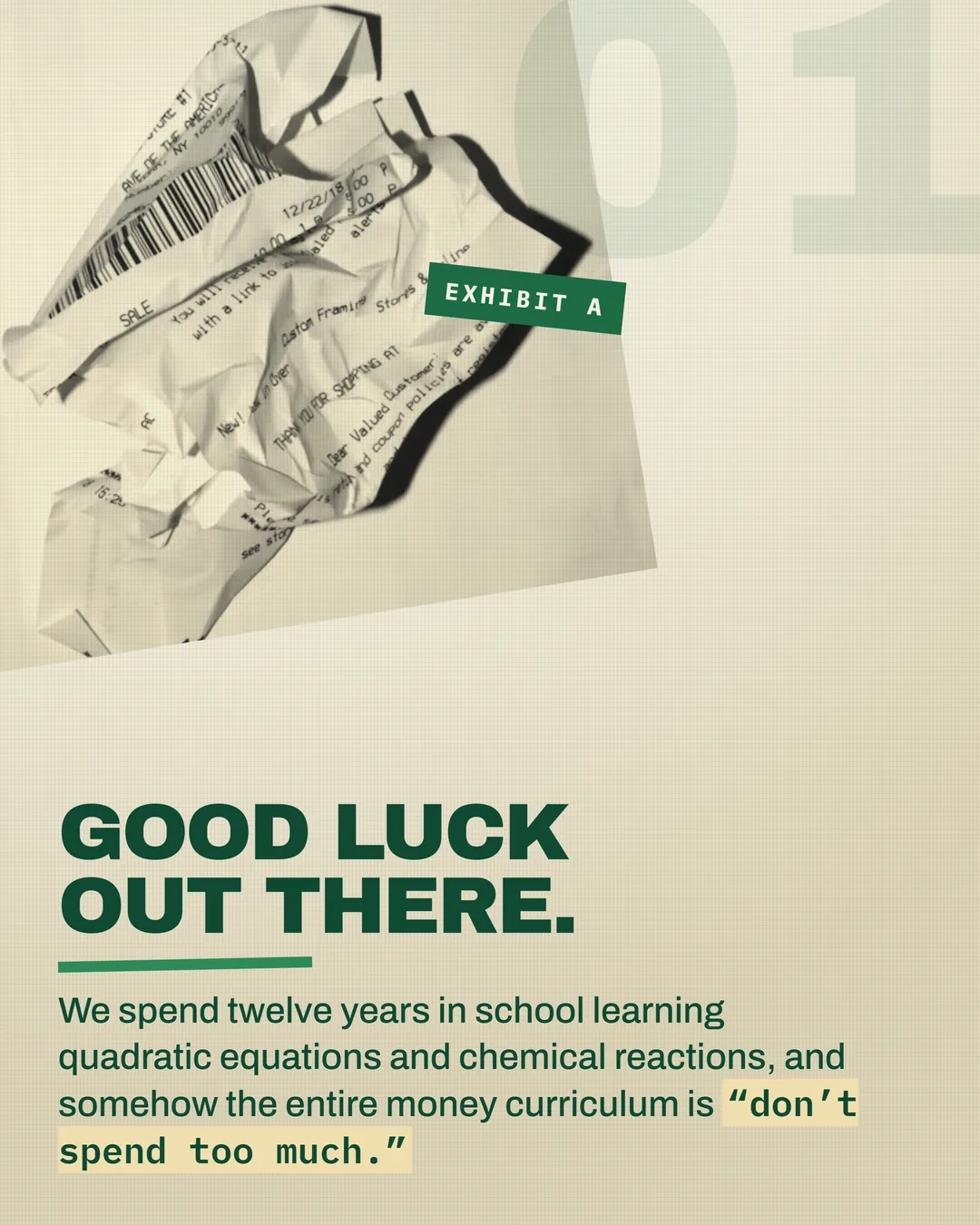
Twelve years of quadratic equations, and the entire money curriculum comes down to “don't spend too much.” Good luck out there.

We spend roughly twelve years in school learning how to solve quadratic equations, identify metaphors, memorise chemical reactions and calculate the probability of a bag containing three red balls.
But somehow, when it comes to money, the curriculum becomes: “Don't spend too much.” That's it. Good luck out there.
We're expected to eventually earn money, pay bills, use bank accounts, understand taxes, make investments, handle debt and somehow avoid making financially disastrous decisions. Yet most of us are never actually taught how any of it works.
We learn about money. We don't learn how to manage it.
The strange way we learn about money
Most people don't learn personal finance in a classroom. They learn it from their parents. Or their friends. Or YouTube.
Or, unfortunately, from a guy on Instagram standing next to a Lamborghini telling you that if you're not making ₹10 lakh a month at 19, you're doing something wrong.
And this is where things get complicated. Some families talk about money openly. Others don't. Some parents teach their children how to budget, save and compare prices. Others simply say, “Don't worry about money until you're older.”
But eventually, older arrives. And suddenly you're expected to know what an EMI is.
We confuse earning money with understanding money
One of the biggest misconceptions is that financial literacy begins when you get a salary. It doesn't.
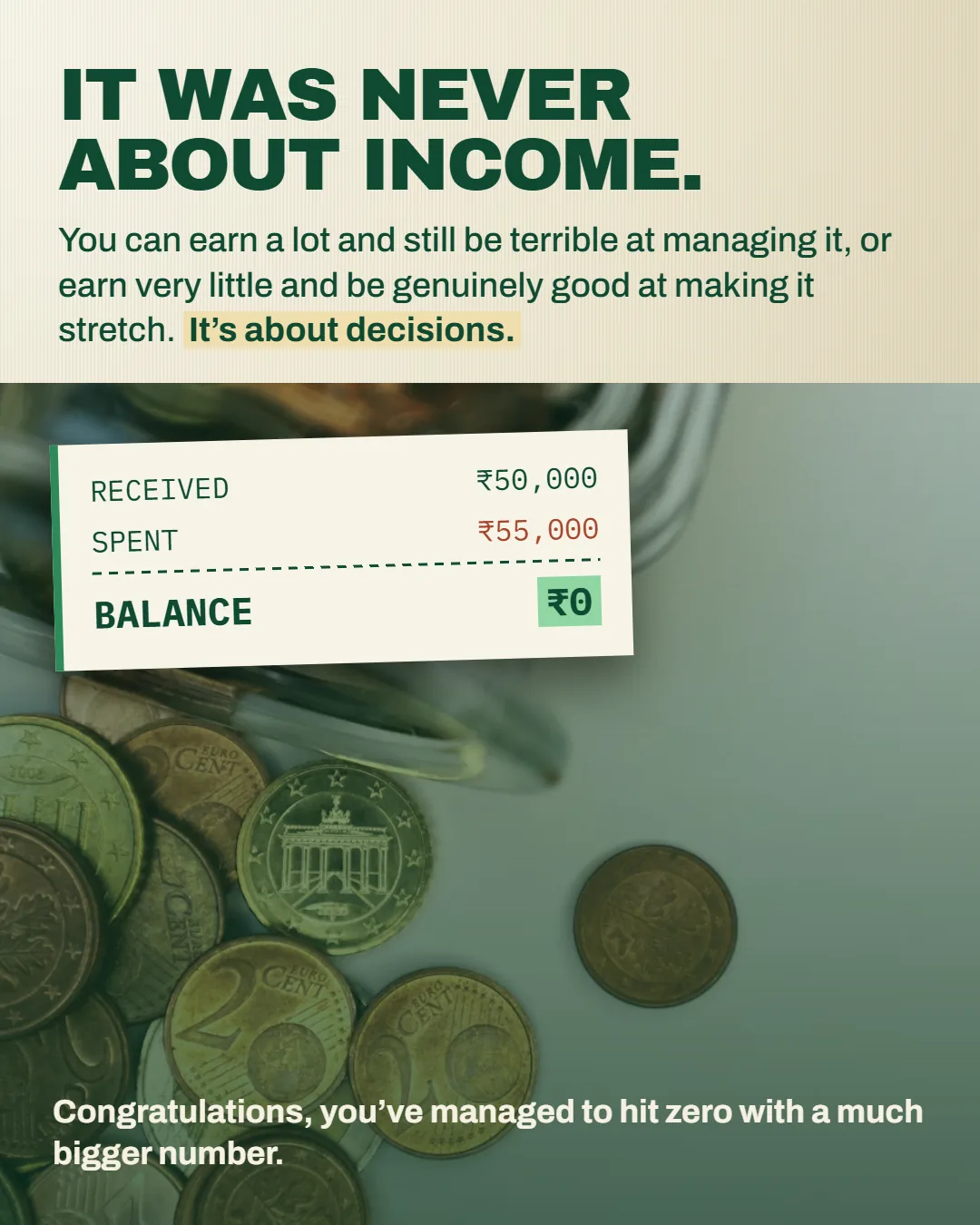
You can earn a lot of money and still be terrible at managing it. You can also earn very little and be surprisingly good at making what you have last. Because personal finance isn't just about income. It's about decisions.
If you receive ₹5,000 and spend ₹5,000, you have ₹0. If you receive ₹50,000 and spend ₹55,000, congratulations—you've somehow achieved the same result with a larger number.
Money has this annoying habit of disappearing without asking for permission. And modern life makes it ridiculously easy.
Tap. Order food. Tap. Buy the shirt. Tap. Subscribe to something you forgot existed. Tap. “Payment successful.”
Your bank balance has left the chat.
The problem with “I'll start saving later”
Young people are often told: “You don't need to worry about money yet.” And honestly, that's partly true. You shouldn't be obsessing over retirement at 16.
But there's a difference between not needing much money and not needing money skills. In fact, being young is probably one of the best times to learn them.
You can make small mistakes with small amounts of money. That's a much better deal than making huge mistakes with huge amounts later.
Learning how to budget ₹2,000 is far less painful than learning how to manage ₹2 lakh after you've already spent ₹1.95 lakh of it.
So what should we actually learn?
The first thing is boring. Which means it's probably important.
1. Know where your money goes
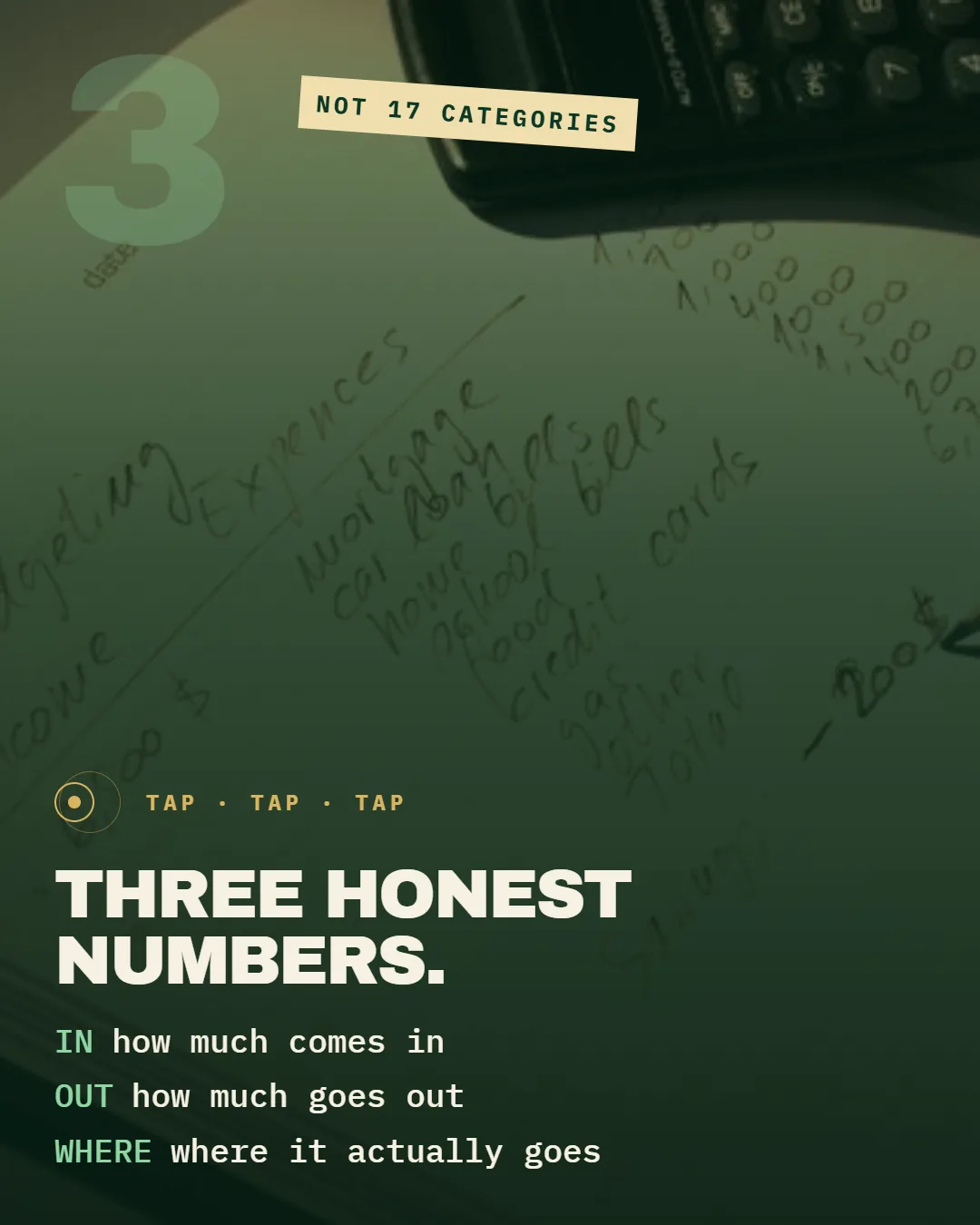
You don't need a complicated spreadsheet with seventeen categories. Start by knowing three things: How much comes in? How much goes out? Where does it go?
Because “I don't know where my money went” is not a financial strategy.
If you get pocket money, an allowance, income from a small job, or occasional gifts, track it. Not forever. Just long enough to discover your patterns.
You might discover that you're not actually spending ₹200 here and ₹300 there. You're spending ₹200 here, ₹300 there, ₹150 somewhere else, and suddenly ₹3,000 has disappeared like it had somewhere important to be.
2. Learn the difference between wanting and needing
This sounds painfully obvious. It isn't. Marketing exists specifically to make wants feel like needs.
You don't need the new phone. You want it. You don't need another pair of shoes. You want them. And that's completely fine.
The goal isn't to eliminate everything you want. That's not budgeting. That's punishment. The goal is simply to know the difference.
You can spend money on something unnecessary and still make a good financial decision—as long as you knew it was unnecessary and could afford it.
3. Save before you spend everything
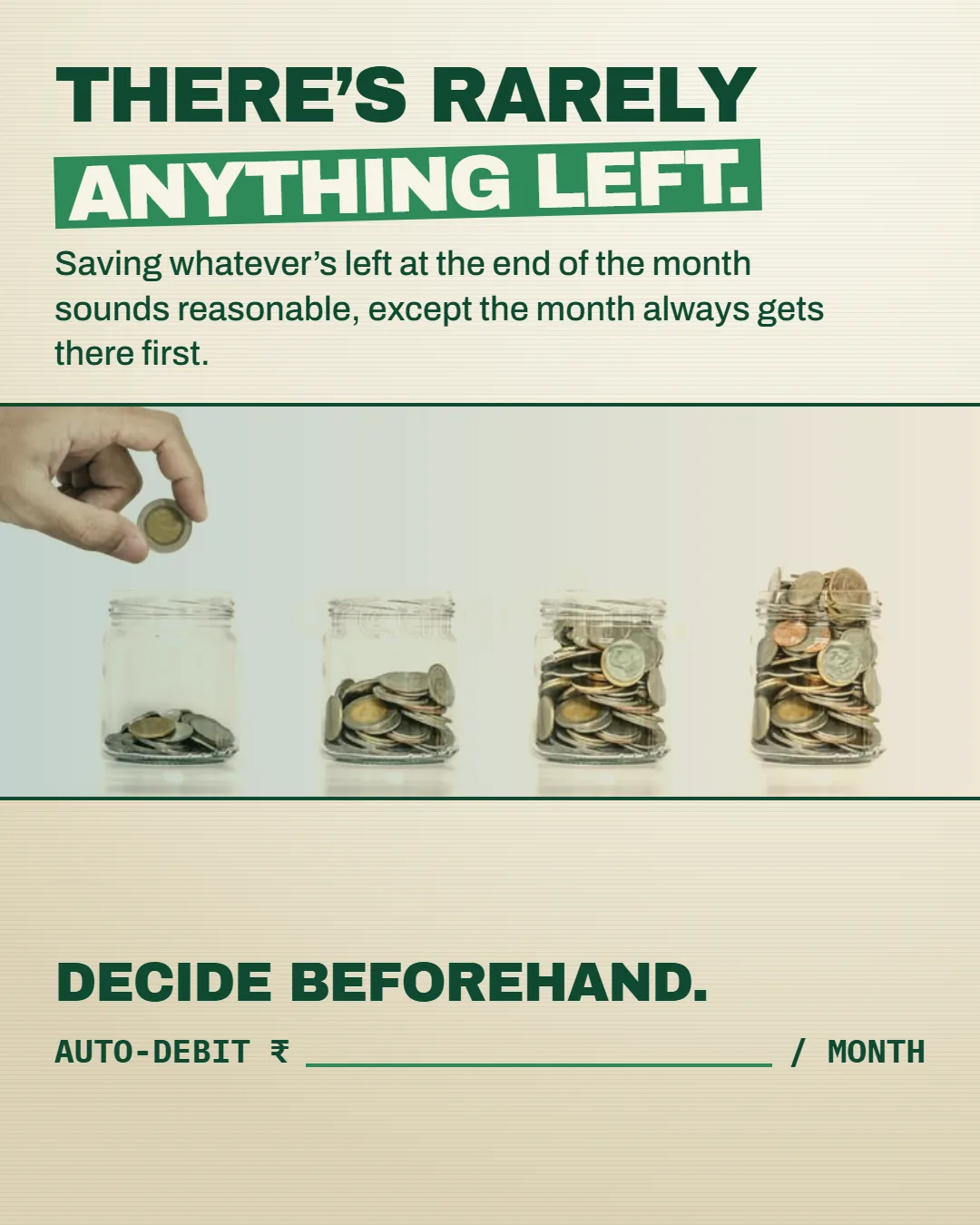
Saving what's left after spending sounds logical. Except there is a problem: there is usually nothing left.
If you wait until the end of the month to save whatever survived, your money will somehow have developed legs.
Instead, decide beforehand how much you want to save. Even a small amount builds the habit. The amount matters less at first than learning that not every rupee you receive is automatically available to spend.
4. Learn about investing—but don't rush into it
This is where the internet gets especially funny. Tell people you want to learn about investing and you'll immediately find someone recommending a stock that is apparently “about to explode.”
Suddenly everyone is Warren Buffett. Except Warren Buffett probably wasn't taking stock tips from a 19-year-old's Instagram story.
Investing is something worth learning about. But learning comes before investing. Understand things like inflation, compounding, risk, diversification and different types of investments.
And remember: if someone promises huge returns with almost no risk, that's not necessarily a financial opportunity. It might just be a very creative way of saying “please give me your money.”
5. Don't make money your entire personality
This might be the most important one. Financial literacy isn't about becoming obsessed with money. It's about making money less stressful.
The goal isn't to spend every waking hour thinking about your bank balance. It's to understand your finances well enough that you can make decisions without constantly panicking.
You should be able to buy something you genuinely want without feeling guilty. You should also be able to say, “No, I can't afford that right now,” without feeling embarrassed.
Both are financial skills.
Maybe schools should teach this
Imagine if instead of only learning theoretical economics, students also had a practical personal-finance class.
You could learn how bank accounts work. How credit works. How interest works. How loans work. How taxes work. How to make a budget. How to recognise financial scams. How investing works. How to read a payslip.
Basically, the things you discover only after someone expects you to already know them.
It wouldn't solve every financial problem. But it would give young people something incredibly valuable: a starting point.
Because eventually, every student leaves school. The quadratic equations might never come up again. Your relationship with money probably will.
And maybe that's the strange part. We're preparing young people for jobs they haven't chosen yet, universities they haven't attended yet and careers that might not even exist yet. But we're not always preparing them for something they'll almost certainly have to deal with: their own money.
Nobody needs to become a financial expert at 17. But learning how money works before you desperately need to know how money works is probably a pretty good idea.
Because adulthood already comes with enough surprises. Your bank account shouldn't be one of them.

eunoiaandbeyond
Original post





Also on Instagram
We ran this one as a carousel too.
The caption
We were taught how to solve for x, but not what to do with the money we earn.
and as a youth organization, the curiosity and the need to understand and make you all known of what we came across felt necessary.
Read more on our website and substack page.