
.png)
The identity crisis of growing up online
Before we learn who we are, the internet asks us to decide how we want to be seen — and then keeps the receipts.
Before we learn who we are, the internet often asks us to decide how we want to be seen. We grow up with the whole digital world in our pockets, an audience at our fingertips, and algorithms constantly measuring us against what we could — and perhaps should — look like.
Childhood used to be the time for trying things on: different ideas, different selves, different versions of a person under different roofs. Today a great deal of that happens in public, measured in likes, comments, followers and views.
Growing up with an audience
Growing up has never been simple. Teenagers have always struggled with the same questions. Who do I trust? Who do I follow? What do I want to become? Where do I belong?
But growing up today comes with a second set of problems. We are not only discovering ourselves in the real world, we are doing it online, in front of an audience. Social media has become a second environment, where a lot of people live one life and show another. Instagram, YouTube, Snapchat and the rest genuinely let young people express themselves and connect with people they might never otherwise meet. They also make identity feel like something unstable.
Comparison
Comparison is the thief of joy.
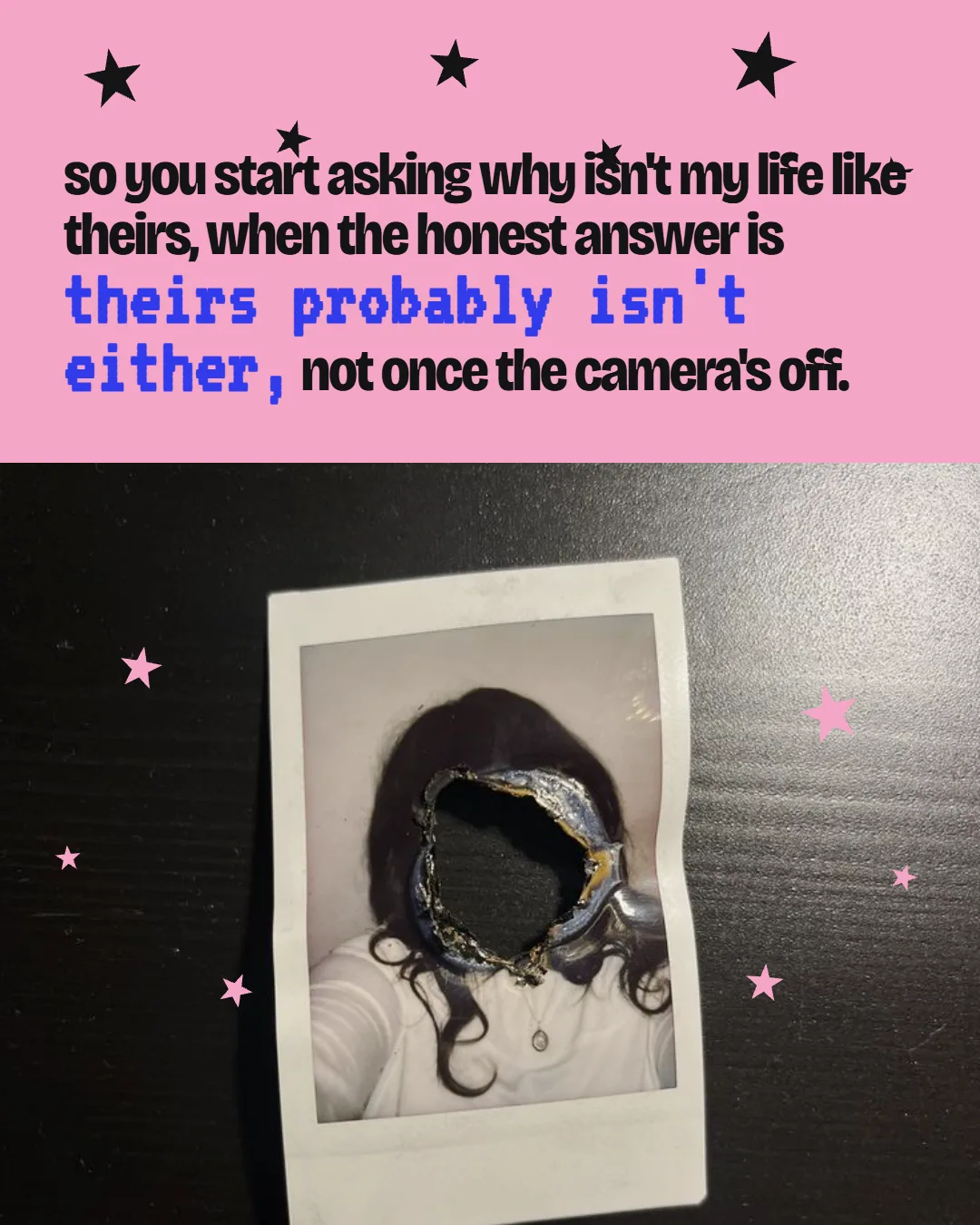
The line is Theodore Roosevelt's, and online it has never been more literal. People present the best parts of their lives: the perfect holiday, the best outfit, a new achievement, a carefully chosen photograph. Seen often enough, ordinary life starts to look inadequate.
A teenager begins asking: why don't I look like them? Why isn't my life as exciting? Why don't I have as many friends? The trap is that they are comparing their entire everyday reality against someone else's carefully selected highlights.
The version built for an audience
Social media also blurs the difference between who we are and who we want others to think we are. A person picks a style, a music taste, a personality, an opinion — partly, sometimes entirely, because of how it will be received. Over time it becomes genuinely difficult to tell whether those choices represent them, or represent a version of them designed for an audience.
The pressure gets heavier because an online identity can feel permanent. A photograph, a comment or an embarrassing moment can remain long after the person has changed. That makes young people afraid to experiment with their identity — and experimentation is one of the most important parts of growing up. Instead of asking what do I like? they start asking what will people think if I do this?
The internet is not the whole problem
None of this is entirely the internet's fault. Online spaces also help young people discover interests and friendships that do not exist around them physically. Someone who feels out of place at school can find people who understand them. The internet both complicates identity and gives some people the first place they have been able to live with theirs.
Perhaps the real challenge is learning to keep a life outside the screen. Not every experience needs to be photographed. Not every opinion needs to be posted. Not every achievement needs an audience. There should still be room to make mistakes, pick up new interests, simply exist, and show who you actually are without working out first how it will look.
Conclusion
Growing up online means having access to more possibilities than any generation before us had. It also means more eyes on you while you are still trying to figure out who you are.
If enough love can make a bad person feel good and enough hatred can make a good person feel bad, why should anyone else's opinion get to define who we are? The more we focus on how others see us, the more we begin to notice — and doubt — our own insecurities.
The goal was never to escape the digital world. It is remembering that it is not the definition of who we are.

eunoiaandbeyond
Original post