.png)
Can morality exist without religion?
Babies who cannot yet talk already prefer the kind puppet. Whatever morality is made of, some of it was there before anyone taught us a religion.

What is morality?
Morality is the set of principles that helps us decide what is right and wrong.
It shapes almost every interaction we have with other people. Before we admire someone's intelligence or success, we first judge whether they are trustworthy, kind or harmful.
In other words, morality is one of the foundations of human society.
So where does it come from?
Our moral values are shaped by three main things: upbringing, environment and religion. Religion is certainly one of them, but it is not the only one.
Morality came first
Your conscience existed before your religion did.
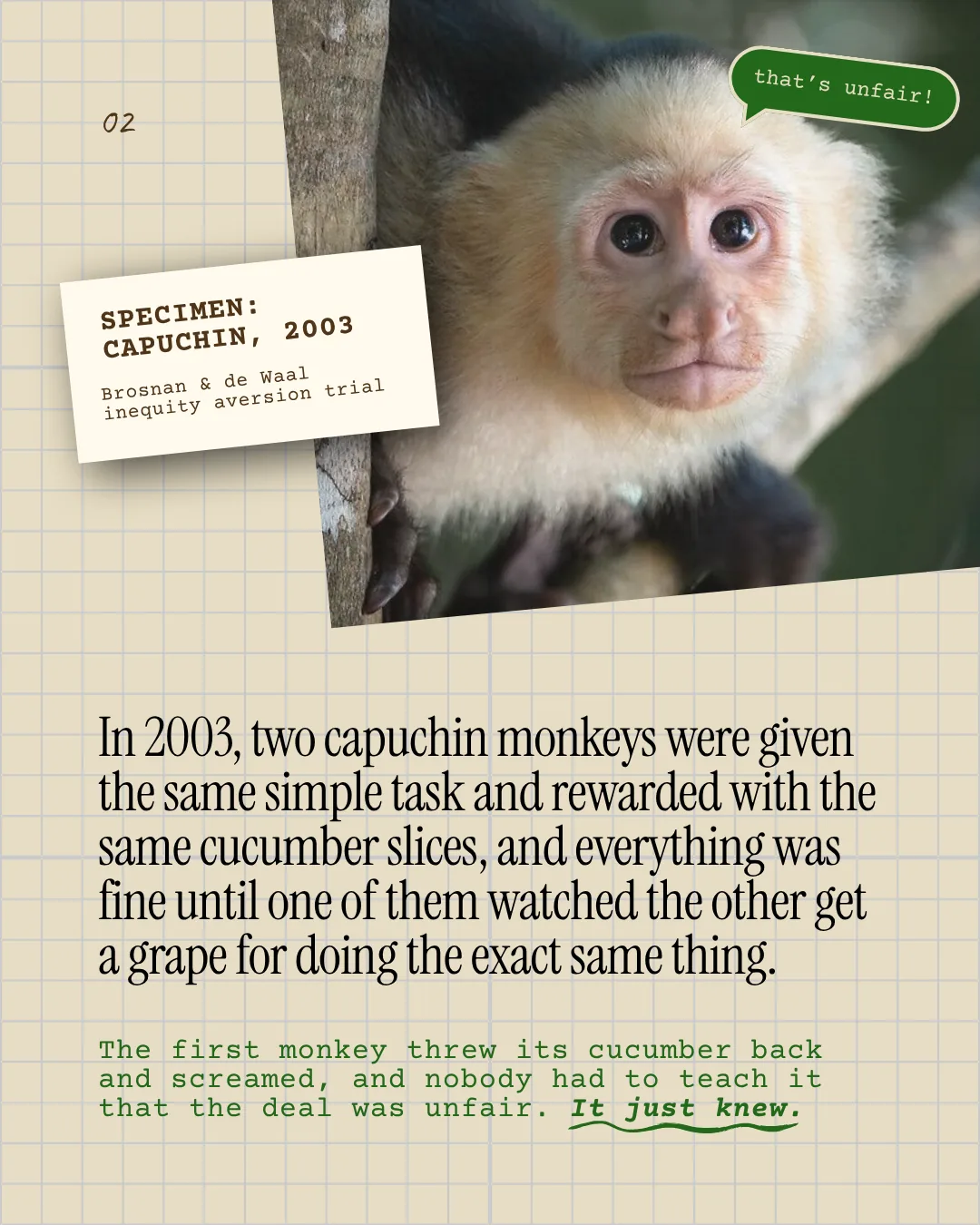
In 2003, scientists ran a famous experiment with two capuchin monkeys. Both were asked to complete the same simple task: hand over a pebble in exchange for food.
At first, both monkeys received cucumber slices. Everything was fine. But then one monkey watched the other receive a grape for doing the exact same task.
For a capuchin monkey, grapes are far more valuable than cucumbers.
When the first monkey was handed another cucumber, it threw it back at the researcher, shook the cage and screamed in frustration.
The important part is this: the monkey had never read a holy book. It had no religion, no idea of heaven or hell, and no fear of punishment after death.
Yet it still recognised that something was unfair. It had a sense of justice.
The belief many of us grow up with
Most of us are taught from a young age that we should be good because God is watching us.
For many people, morality and religion seem inseparable. The common belief is that without religion, people would have no reason to behave morally.
But is that true?
Morality appears before religion
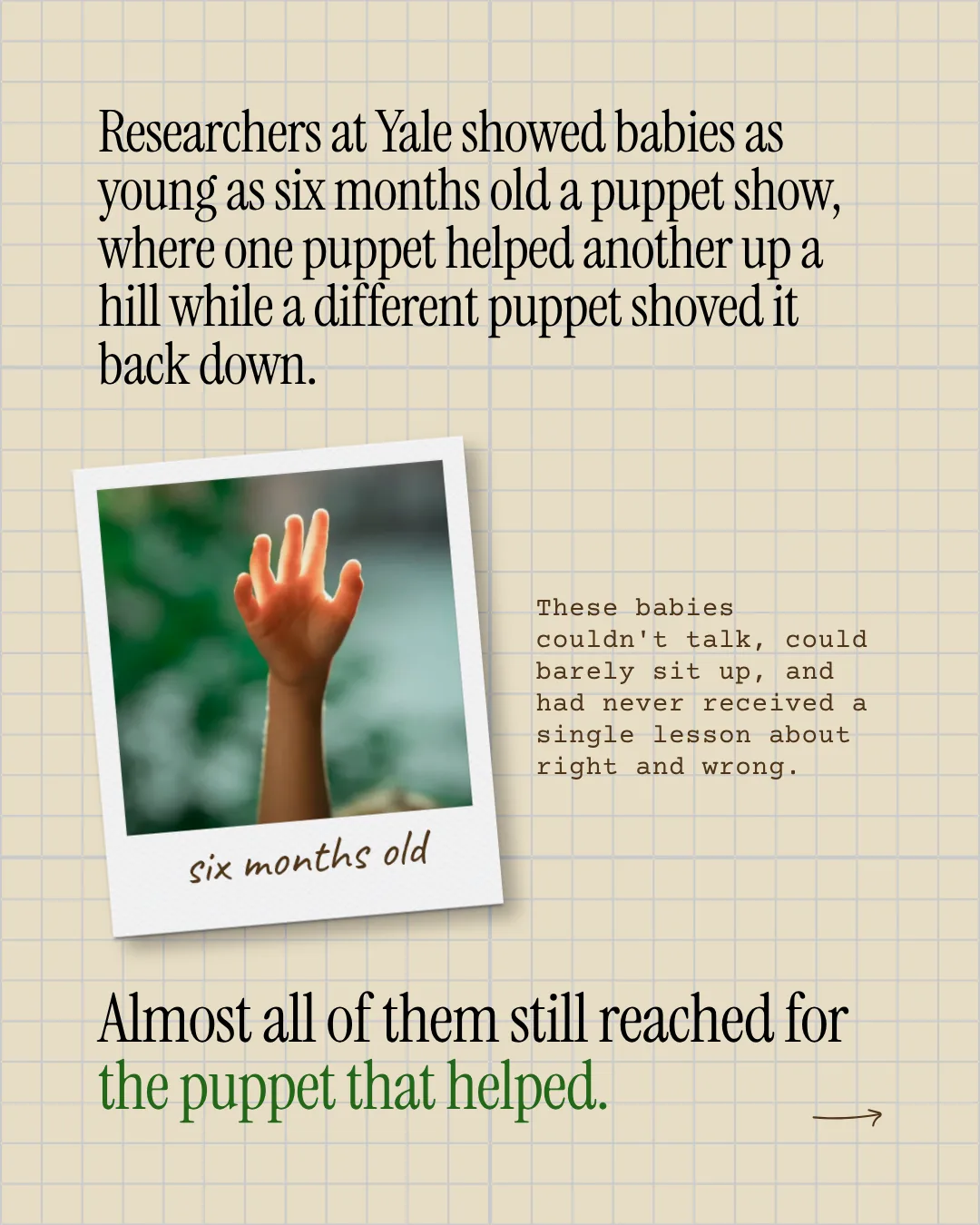
One of the strongest pieces of evidence comes from developmental psychology. Researchers at Yale University's Infant Cognition Center showed babies a simple puppet show.
In the first scene, one puppet helped another climb a hill. In the second scene, a different puppet pushed it back down.
Afterwards, babies who were only six to ten months old were asked which puppet they preferred. Most reached for the helpful one.
These babies could not talk. They could barely walk. They were far too young to understand any religion. Yet they already showed a preference for kindness over harm.
This suggests that some parts of morality develop before religious teaching begins.
Which came first: God or morality?
This question has been debated by philosophers for thousands of years.
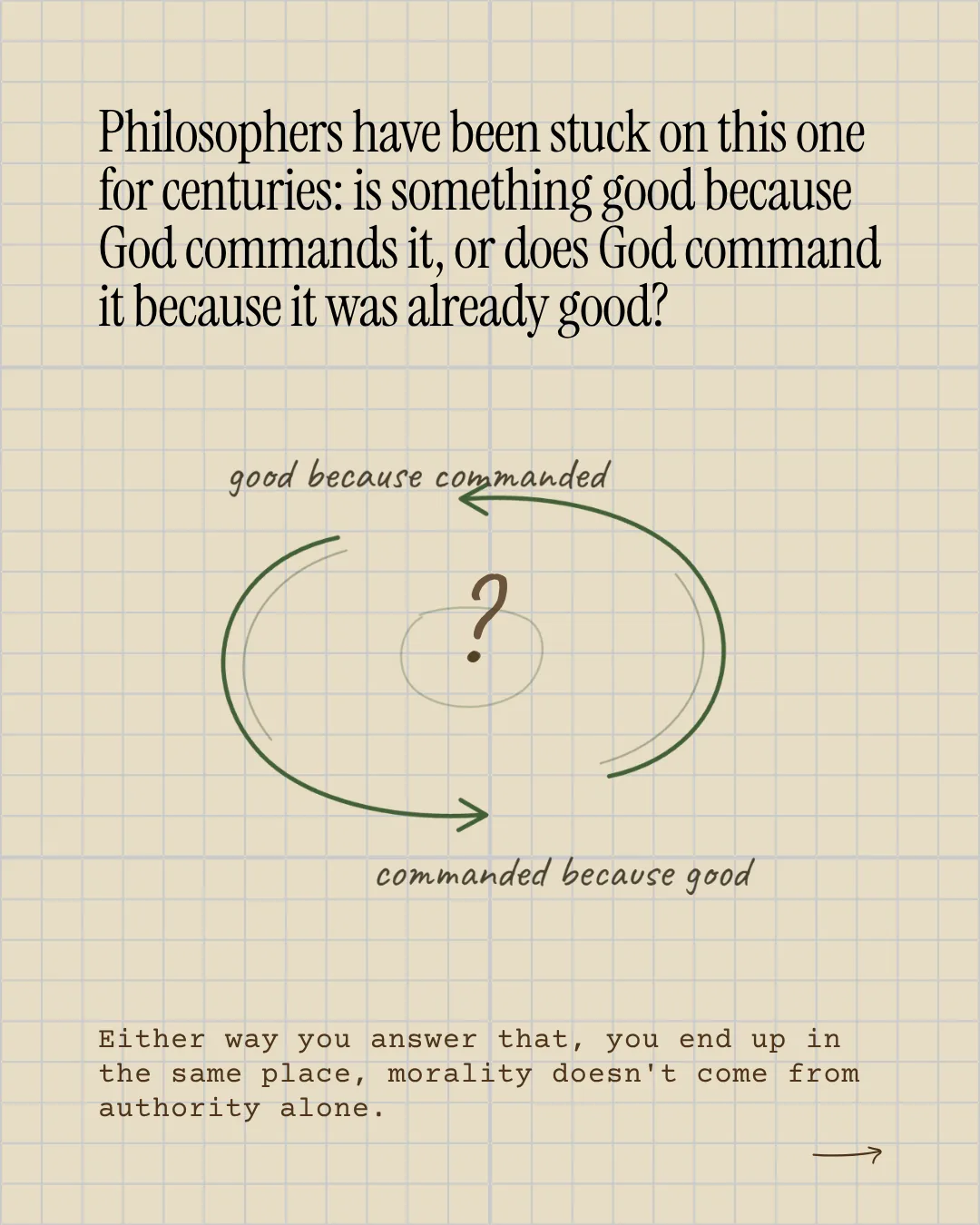
Is something good because God commands it? Or does God command it because it is already good?
If something is good only because God commands it, then morality becomes completely dependent on authority. In theory, if any action were commanded, it would automatically become “good.”
On the other hand, if God commands actions because they are already good, then goodness exists independently of those commands.
Either way, morality cannot simply be explained by religion alone.
Can morality exist without religion?
Yes.
A person does not need to follow a religion to care about honesty, fairness, kindness or compassion. Likewise, simply being religious does not automatically make someone moral. History and everyday life both show us kind, compassionate atheists and cruel religious people.
Religion has played an important role in teaching and spreading moral values. It has helped pass those ideas from one generation to the next, and it has encouraged millions of people to live ethical lives.
However, it is better understood as a guide for morality rather than its only source.
Conclusion
Long before children learn prayers or religious beliefs, they begin to recognise kindness, fairness and empathy.
Long before humans built temples or wrote sacred books, our ancestors lived in groups that depended on cooperation and trust to survive.
Religion has strengthened morality and helped preserve it across cultures, but morality itself appears to have much deeper roots.
eunoiaandbeyond
Original post