.png)
Unlearning what school has taught us about failure
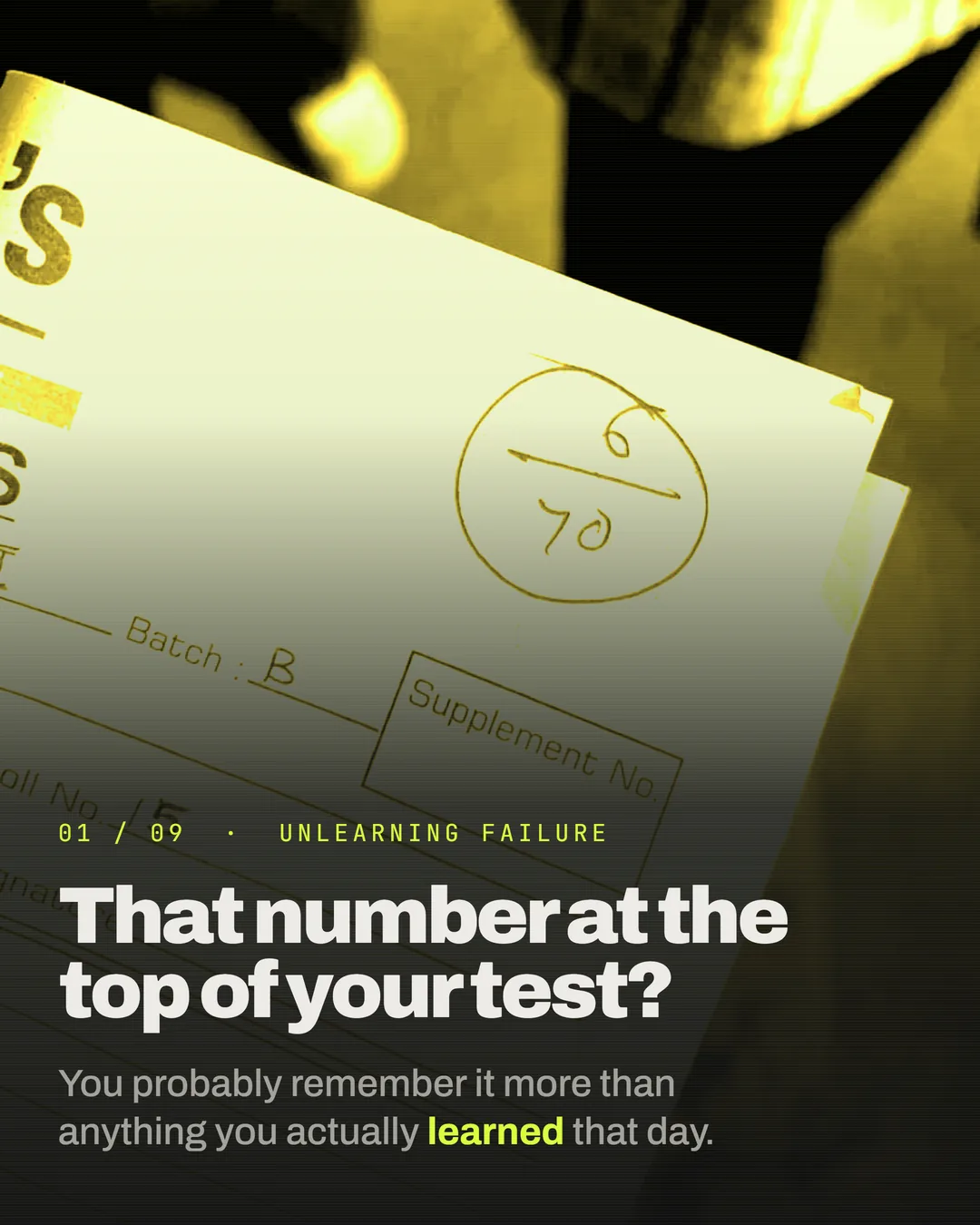
Nobody ever says failing means you're incapable. Somewhere between marks, ranks and applause, we learn it anyway.

Nobody ever walks into a classroom on the first day and tells us that failure means we are incapable. Yet somewhere between marks, ranks, competitions, applause and comparison, we quietly learn exactly that.
We learn to celebrate the person who comes first. We learn to admire the highest marks, the medals, the certificates and the victories. And there is nothing wrong with celebrating achievement. The problem begins when achievement becomes the evidence we use to decide whether we are capable, worthy, or successful.
School can make success feel like a ladder. Every time we climb higher, we receive encouragement. We win, people applaud, and we begin to trust ourselves a little more. We start believing, I can do this. But then, inevitably, we fall. And suddenly, the same system that taught us to associate winning with capability can make losing feel like evidence of its absence.
Perhaps that is what we need to unlearn.
Failure is not the opposite of success. It is one of the experiences through which success, competence and judgment are built.
We admire the destination and erase the road
Think about how we usually see successful people. We see the entrepreneur after the company succeeds, the artist after the masterpiece, the athlete after the victory and the student after the outstanding result. We rarely see the attempts that came before. We forget that every expert was once a beginner, every confident person was once uncertain, and every winner was, at some point, a starter who did not know what they were doing.
This creates an illusion that successful people were always successful — that some people were simply “naturally good” at what they do. Certainly, some people have an early advantage or discover their talents young. But many people begin badly. They make mistakes, choose the wrong approach, fail repeatedly, learn, adjust, and eventually become good at what they once struggled to do.
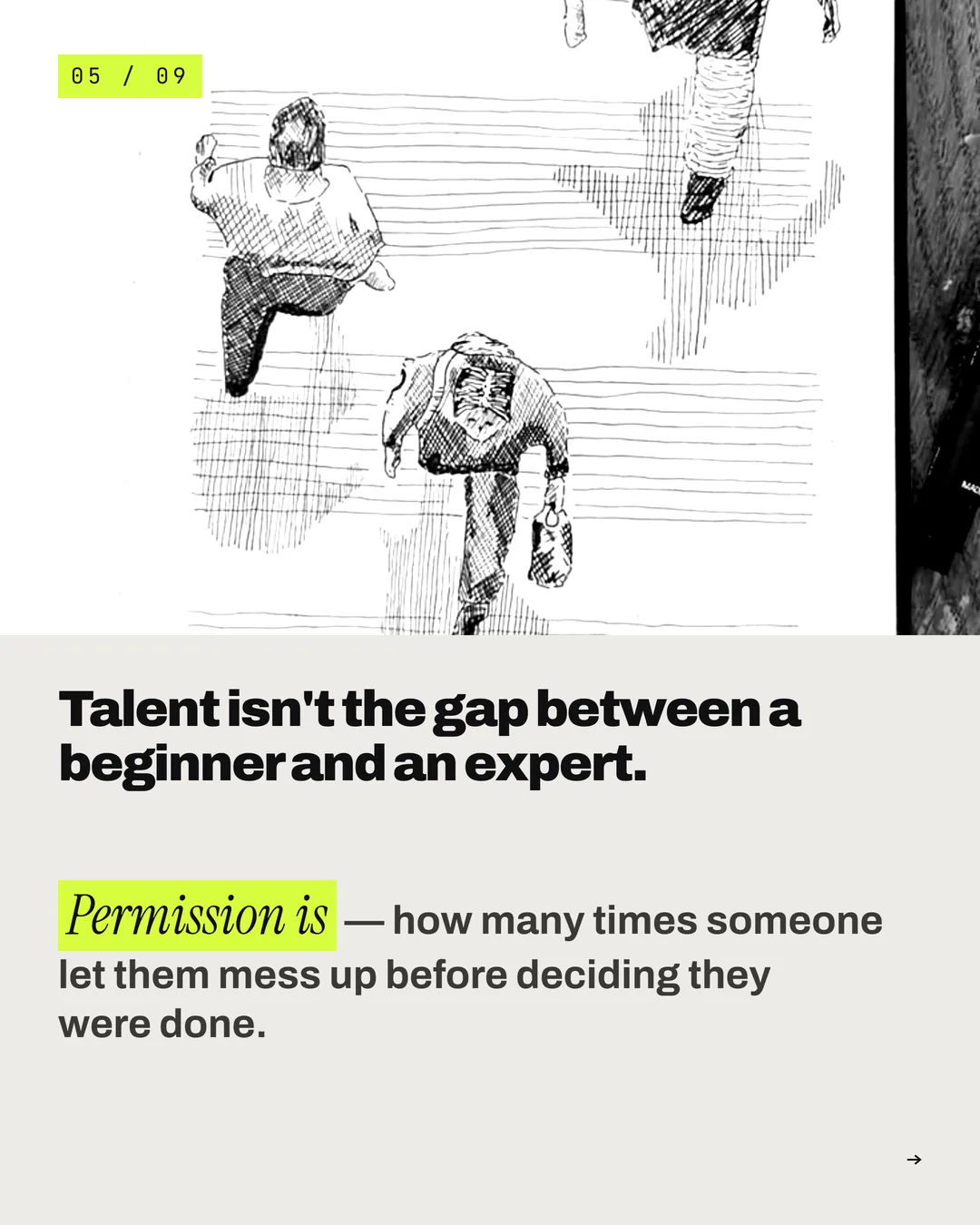
The difference between a beginner and an expert is often not that one never failed. It is that one had enough opportunities to fail, learn, and continue.
Yet school can make mistakes feel strangely expensive. We are told that mistakes are how we learn, while simultaneously being rewarded for avoiding them. A wrong answer loses marks. A poor test result affects our percentage. A low rank invites comparison. We are encouraged to experiment, but we also learn very quickly that being wrong is something we should avoid.
This creates a contradiction: “learn from your mistakes,” while quietly teaching us, “try not to make too many.” Eventually the question changes. Instead of asking, “What can I learn from this?” we begin asking, “What will this say about me?”
Where failure becomes psychological
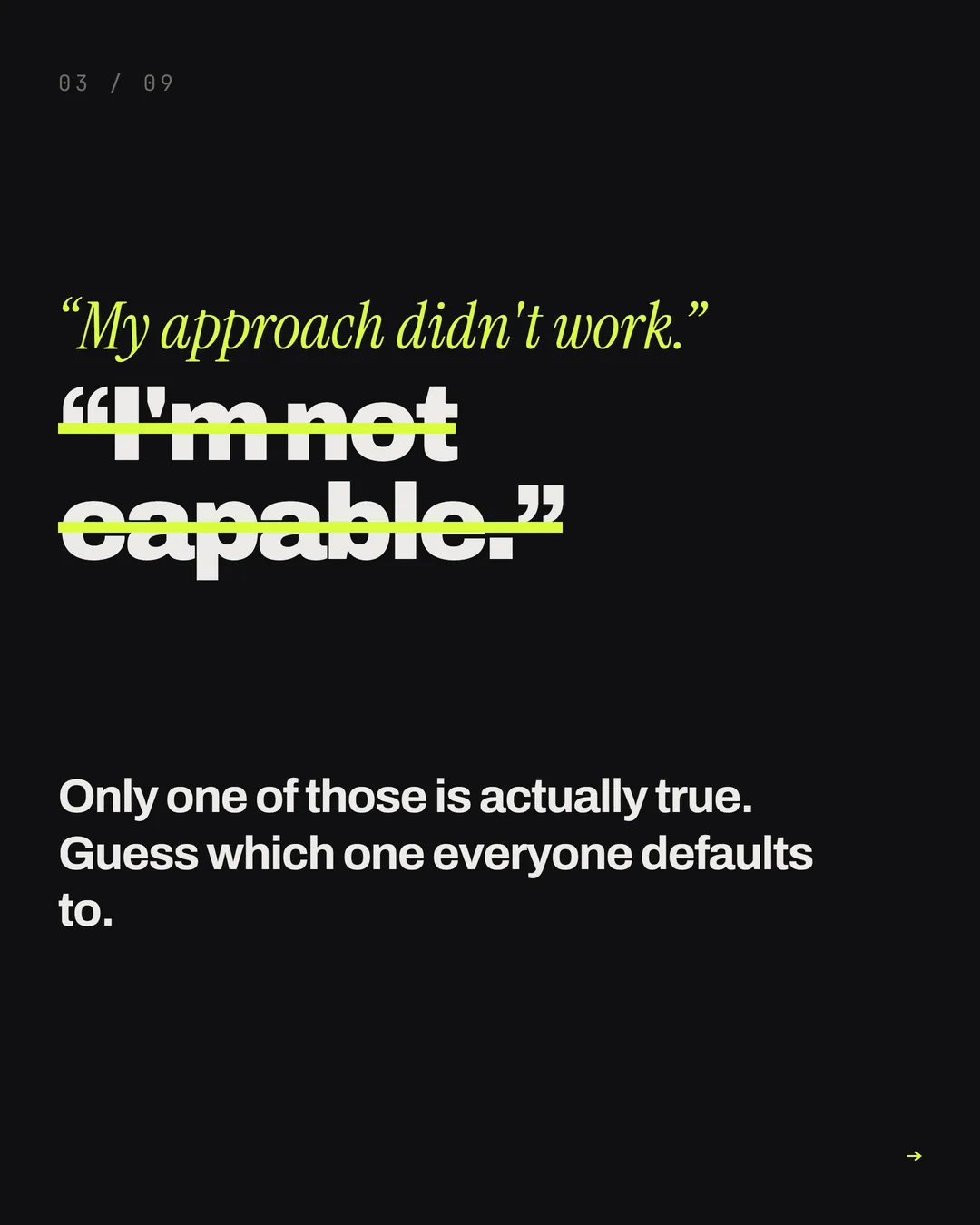
A failed attempt is an event. But the meaning we attach to it is a choice our mind makes. We can think, “my approach did not work,” or we can turn it into, “I am not capable.” The first is information. The second is an identity.
Failure can damage something even more personal than our reputation: our trust in ourselves. At a certain point we may stop caring about whether other people think we are successful. We can tell ourselves, let them think whatever they want, I know myself. But then a decision we genuinely believed in fails.
Now the question is no longer, “What will they think of me?” It becomes, “Was I wrong to trust myself?” That is why failure can hurt even when we have stopped caring about external judgment. It can make us question our own decisions, abilities and instincts. The challenge is not simply accepting that something went wrong. It is learning to separate “I made a bad decision” from “I am bad at making decisions.”
One describes an experience. The other describes an identity.
Survivable, understandable, useful
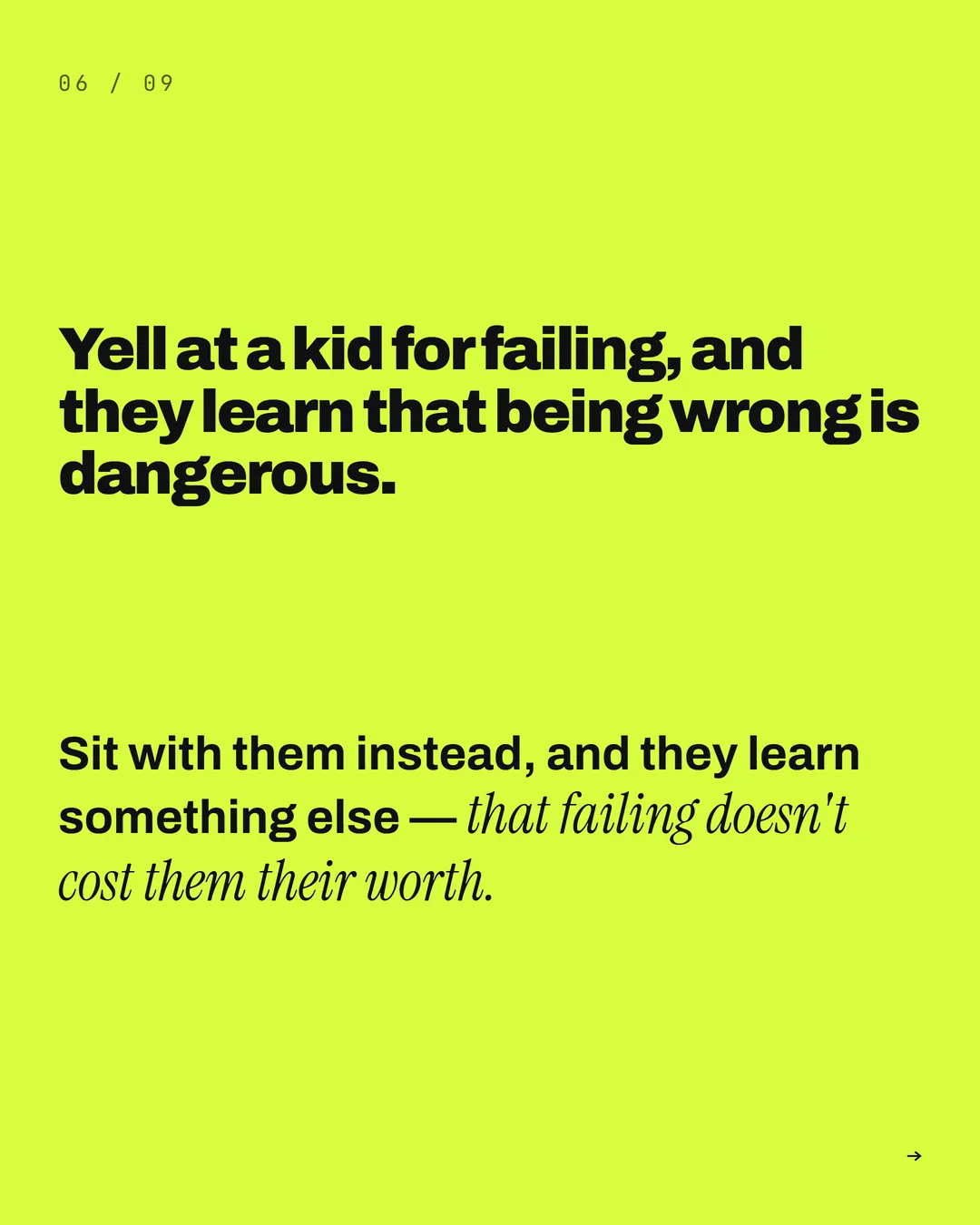
This distinction is also shaped by how the people around us respond to failure. A child who fails and is met only with anger may begin to associate failure with danger: disappointment, rejection or shame. That child may grow into someone who avoids risks not because they lack ambition, but because they have learned that being wrong is unsafe.
On the other hand, a child whose failure is met with support and accountability can learn something very different: I can fail without losing my worth.
That does not mean pretending failure does not matter. A healthy response is not, “it doesn't matter that you failed.” It is, “you failed, and that can be fixed next time.” Straw Hat once said, as long as you're alive, you have infinite chances. Now look at what actually went wrong.
There is an important difference between removing consequences and removing shame. We do not need to teach children that failure is meaningless. We need to teach them that failure is survivable, understandable and useful.
Because when people stop treating failure as a threat to their identity, they become more willing to experiment. They are more willing to attempt things they are not immediately good at. They can enter unfamiliar territory without needing a guarantee that they will succeed.
And that matters far beyond school. Scientists have to test ideas that may be wrong. Artists have to create work that may not be understood. Entrepreneurs have to make decisions without knowing whether they will work. Inventors have to build things that may fail. Ordinary people have to make choices without being given an answer key.
Life does not always give us a question with four options and one correct answer. Sometimes it gives us a blank page.
So perhaps the confidence we should be building is not the confidence that says, “I know I will succeed.” It is the deeper confidence that says, “even if I do not succeed, I will know how to deal with it.” That is resilience.
And this is where we need to rethink what school has unknowingly taught us about failure. Traditional schools often suppress or redirect natural experimental behaviour. Standardised curricula, strict schedules and demands for compliance mean that trial-and-error, curiosity-driven play and boundary-testing are frequently labelled as disruptions rather than vital learning processes.
The goal should not be to raise children who never fail. That is impossible. Nor should we glorify failure as though every failure is automatically beneficial. Failure can hurt. It can disappoint us. Sometimes it can even show us that we made the wrong choice. But it can also give us information that success never had to give us.
Success tells us that something worked. Failure forces us to ask why it did not. It can reveal weaknesses in our preparation, flaws in our reasoning, gaps in our understanding, or simply the need for a different approach. Failure becomes valuable when we are willing to examine it rather than allowing it to define us.
Conclusion
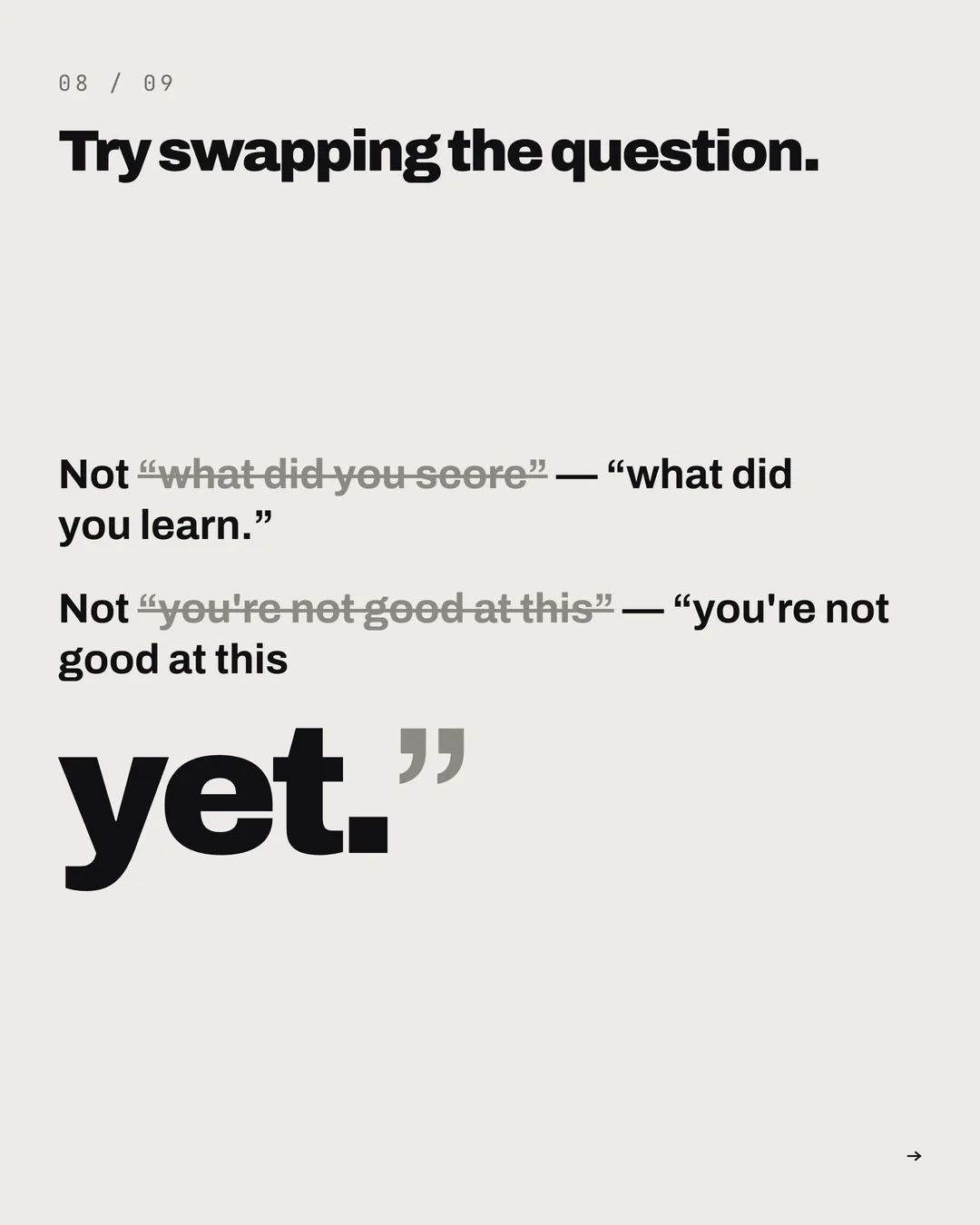
Perhaps the greatest lesson we need to unlearn is not that failure is bad, but that failure makes us failures. We can teach the next generation something different. Instead of asking a child only, “What did you score?” we can ask, “What did you learn?” Instead of saying, “you are not good at this,” we can say, “you are not good at this yet.” Instead of rewarding only the final victory, we can recognise the courage it took to begin, the discipline it took to continue, and the ability to learn when things went wrong.
We should still celebrate success. We should still aim high. We should still want to win. But perhaps we should stop making winning the only proof that we are capable. Because every winner was once a beginner. Every expert once got something wrong. And every person who trusts themselves today has, at some point, had to discover that making the wrong decision does not mean they are incapable of making the next one.
Maybe that is what we should finally teach ourselves about failure: it is not a verdict. It is a conversation between where we are and where we can go next. And perhaps unlearning that old definition is the first lesson we can teach the generation after us.

eunoiaandbeyond
Original post


Also on Instagram
We ran this one as a carousel too.
The caption
Does failing mean you're incapable?
Is success just a destination we admire? Or is it a never-ending journey?
Read a detailed article on this on our own website, or on our Substack page @theeunoiapapers.